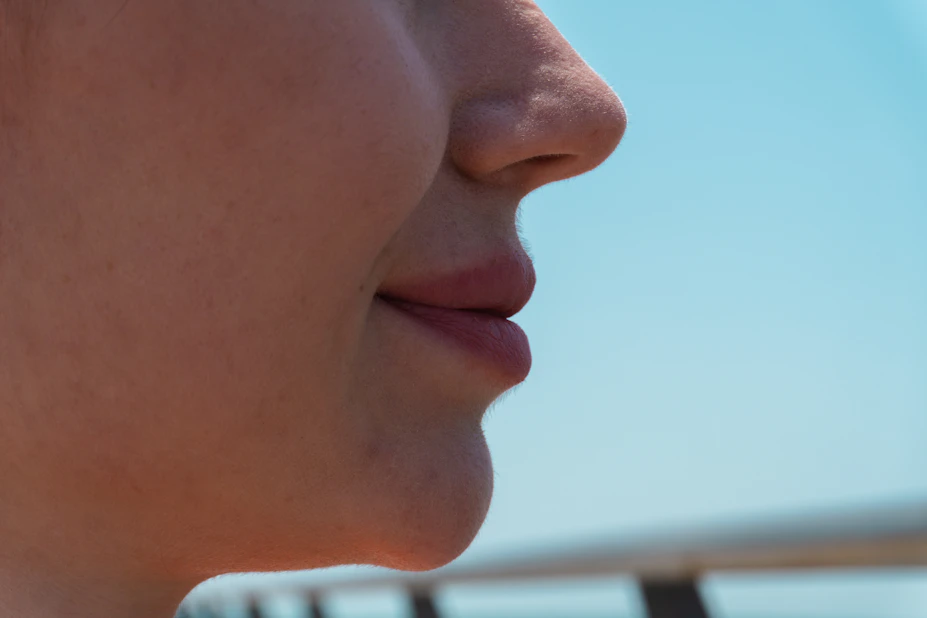
Case study · 2024
Rhinoplasty
Revision
Patient
M.T., 41
Discipline
Facial surgery
Duration
18 months
Correcting an over-reduced nose from a previous surgery, restoring the support it needs to breathe and look natural.

01
The challenge
The patient had a primary rhinoplasty twelve years earlier. The bridge had been lowered too far, the tip had since collapsed and pinched, and she had developed a persistent obstruction on the left side that made sleep and exercise difficult.
She did not want a new nose, only the one she should have had. Photographs from before the first surgery became our reference point, and breathing was treated as the primary outcome rather than an afterthought.
02
The approach
We rebuilt support before we refined shape. Three stages across eighteen months,
allowing the tissues to settle fully before any final judgement.
1
Assess
CT imaging and airflow testing to map the internal damage before any plan was drawn.
2
Rebuild
Open revision using the patient’s own rib cartilage to restore the bridge and tip.
3
Refine
A minor in-office adjustment at month fifteen, once the swelling had fully resolved.
03
The result
Measured against profile imaging and airflow testing at month eighteen,
left-side airflow more than doubled and the profile now matches
her original photographs.
+120%
Left-side airflow
18 mo
Staged over
Further procedures
I can breathe through my nose at night for the first time in a decade, and it finally looks like me.

M.T.
Patient, Malibu