

Low-carbon concrete is no longer a niche material. Discover how next-generation sustainable mixes are reshaping residential construction without compromising
Architecture has always been a mirror of its time — reflecting the values, anxieties, and
aspirations of the civilisations that produce it. As we move deeper into the twenty-first
century, the defining challenge of our era is not aesthetic or structural, but existential: how do we build without destroying the very world we inhabit?
At Arch Studio, sustainability is not a checkbox or a marketing prefix. It is the foundational
grammar of every project we undertake. Over fifteen years of practice across 28 countries, we have developed a methodology that treats ecological responsibility not as a constraint, but as
the most powerful creative brief a designer can receive.
The most sustainable building is the one that has never been demolished. Design for permanence, and sustainability follows.
— Marcus Veil, Principal Architect
Core Principles of Sustainable Practice
Sustainable architecture rests on three interlocking pillars: resource efficiency, ecological integration , and social longevity. A building that consumes minimal energy but displaces a community has failed the third pillar. A building that is beloved and maintained for centuries is, in many ways, more sustainable than a certified-green structure that is demolished in thirty years.
This holistic understanding shapes how we approach every brief. We ask not only "how much energy will this consume?" but "who will maintain this in fifty years, and will they want to?"
100%
LEED Gold or above on all new builds since 2020
62%
Average carbon reduction vs.
conventional construction
40+
Passive house certified
projects completed globally
Material Innovation: Beyond the Standard Palette
The materials we specify are perhaps the single largest lever we have over a building's
environmental footprint. Embodied carbon — the carbon emitted during the extraction, manufacture, and transport of building materials — accounts for roughly 11% of global
greenhouse gas emissions. For a high-specification project, it can represent the majority of a
building's lifetime carbon impact.
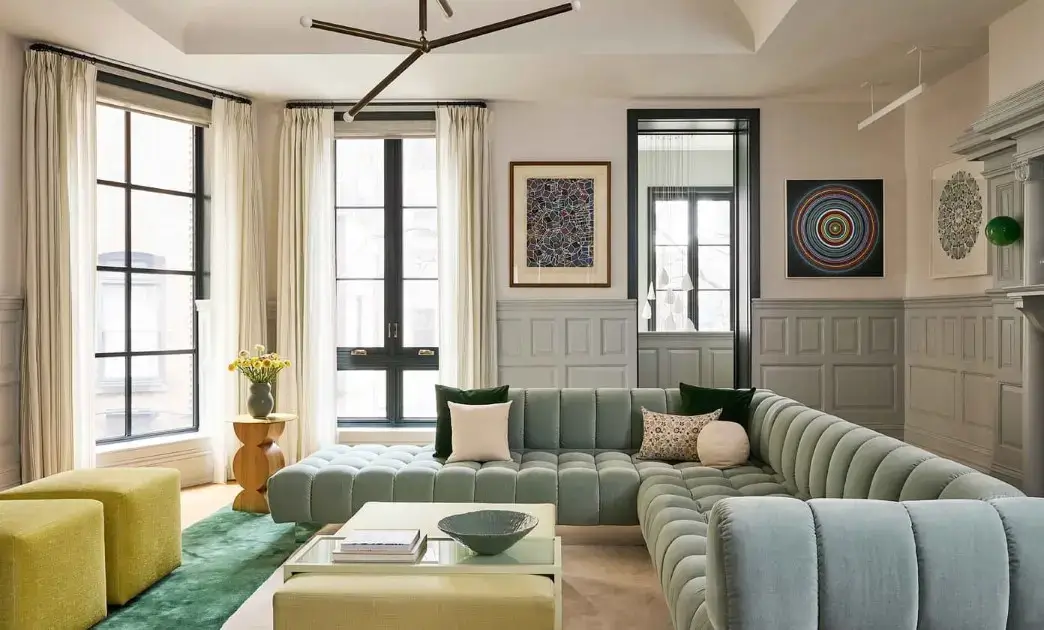
Cross-laminated timber structural frame at the Lumina Residence, Dubai (2023). CLT sequesters approximately 1 tonne of CO₂ per cubic metre of material.
Our material strategy prioritises three categories: bio-based materials (cross-laminated timber, hempcrete, mycelium composites), reclaimed and recycled materials (salvaged steel, crushed glass aggregate, reclaimed brick), and locally sourced materials that minimise transport emissions while supporting regional economies.
We have been working with a network of European CLT manufacturers since 2018, and the results have been transformative. Our timber-framed projects achieve structural performance equivalent to reinforced concrete at roughly 60% of the embodied carbon cost — and they are, without exception, more beautiful.
Key Insight: When specifying materials, always request an Environmental Product
Declaration (EPD). This standardised document provides verified data on a material's lifecycle carbon impact — and increasingly, clients and planning authorities expect to see them.
Biophilic Design: The Human Dimension
Sustainability is not only about the planet — it is about the people who inhabit our buildings. Biophilic design, the practice of embedding connections to the natural world into the built environment, has been shown in peer-reviewed research to reduce stress, improve cognitive performance, and accelerate recovery from illness.
At Arch, biophilic principles are embedded at every scale: from the orientation of a building to maximise natural light and cross-ventilation, to the selection of interior planting species that improve air quality, to the texture of wall finishes that echo natural stone formations. These are not decorative gestures. They are evidence-based design decisions.
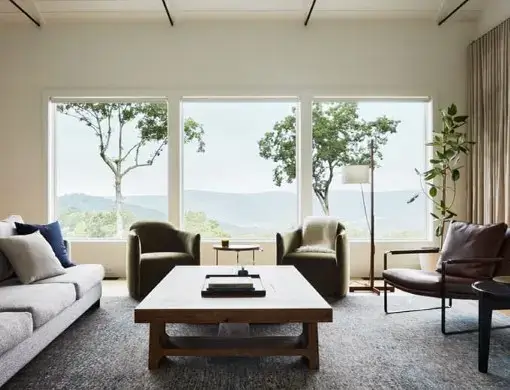
Living wall installation, Berlin HQ lobby
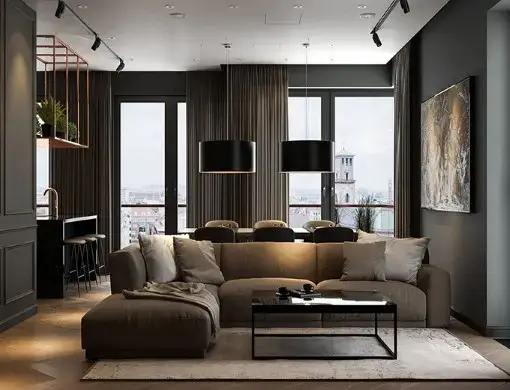
Internal courtyard with mature planting, Tokyo studio
Case Study: The Lumina Residence, Dubai
The Lumina Residence, completed in 2023, represents the fullest expression of our sustainable design philosophy to date. Commissioned by a family who wanted a home that would "outlast our grandchildren," the brief was both ambitious and clarifying.
LOCATION
Dubai, UAE
TYPOLOGY
Private Residence
FLOOR AREA
1,840 m²
CERTIFICATION
LEED Platinum
CARBON REDUCTION
74% vs. benchmark
ENERGY RATING
Net Zero Operational
The Lumina Residence achieves net-zero operational carbon through a combination of 480m² of integrated photovoltaics, a ground-source heat pump array, triple-glazed facades with external shading fins, and a CLT structural frame. The building produces 12% more energy than it consumes annually, with the surplus fed back to the local grid.
Looking Ahead: The Next Decade
The next decade will be defined by two converging forces: the accelerating urgency of the climate crisis, and the rapid maturation of technologies that make truly regenerative architecture possible. Mass timber construction is scaling rapidly. Bio-based insulation materials are achieving performance parity with petrochemical alternatives. Building- integrated photovoltaics are becoming aesthetically seamless.
At Arch, we are already designing for a world in which every new building is a net energy producer, every material has a verified low-carbon origin, and every space is designed to support the wellbeing of its occupants across generations. This is not idealism. It is the only rational response to the brief that history has handed us.
We are not building for today's clients. We are building for their grandchildren, and for the planet those grandchildren will inherit.
— Arch Studio, Sustainability Charter, 2024