
A millimetre is a large number in this work. Move a point of filler by one, or place an incision a single millimetre off its line, and the result reads differently at conversational distance.
Precision is often described as a quality of the hand. In practice it is mostly a quality of the plan. By the time a needle or an instrument touches the skin, every point of placement should already have been decided, measured and marked, so that the procedure itself is an act of execution rather than improvisation.
Measured before it is marked
Every plan starts with standardised photographs and surface measurements taken at rest. We map the landmarks that do not move with expression, then plan placement relative to them rather than to the feature the patient is concerned about. Markings are made with the patient sitting upright, because anatomy shifts when a patient lies down.
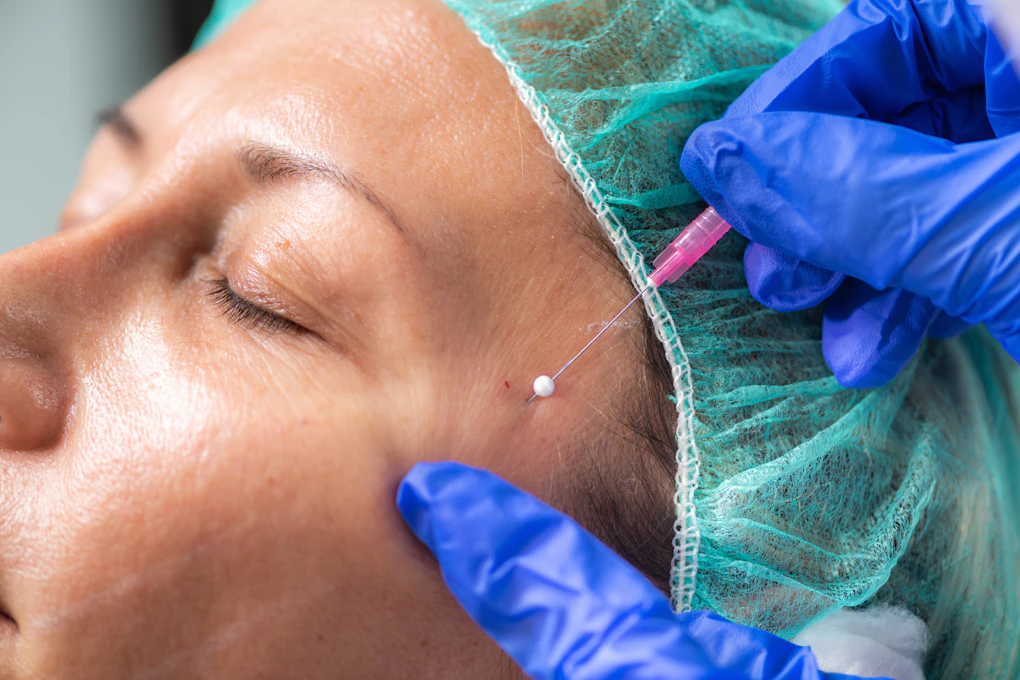
Markings are made upright and checked against the plan before the patient reclines.
Less, placed exactly
The more accurately a treatment is placed, the less material it needs. Our average filler volumes are well below what patients expect, and that is not caution for its own sake. Product placed exactly where the structure needs it does more than a larger amount placed approximately, and it ages far more predictably.
Precision is decided at the planning table. The treatment room is only where it shows.
When patients ask what distinguishes one clinic from another, the honest answer is rarely the product or the device. It is the time spent measuring before anything begins, and the discipline to follow the plan once it does.
