
Grounding gets described as a calming technique, which undersells it. It is closer to a change of address: you move your attention out of the story your mind is building and back into the room you are physically in.
Anxiety runs on prediction. The body prepares for something that has not happened, and because the preparation is real, the threat feels confirmed. Tight chest, shallow breath, a jaw you did not know you were holding. Nothing has occurred, but the evidence appears to be everywhere.
What five minutes changes
A short grounding practice does not remove the worry. It interrupts the loop long enough for your body to receive different information: the floor is solid, the temperature is fine, nothing is happening in this minute. Repeated often, that znterruption becomes
something you can reach for on a bad afternoon.
We are not trying to feel calm. We are trying to notice that the present moment is survivable, and let the body catch up to that.

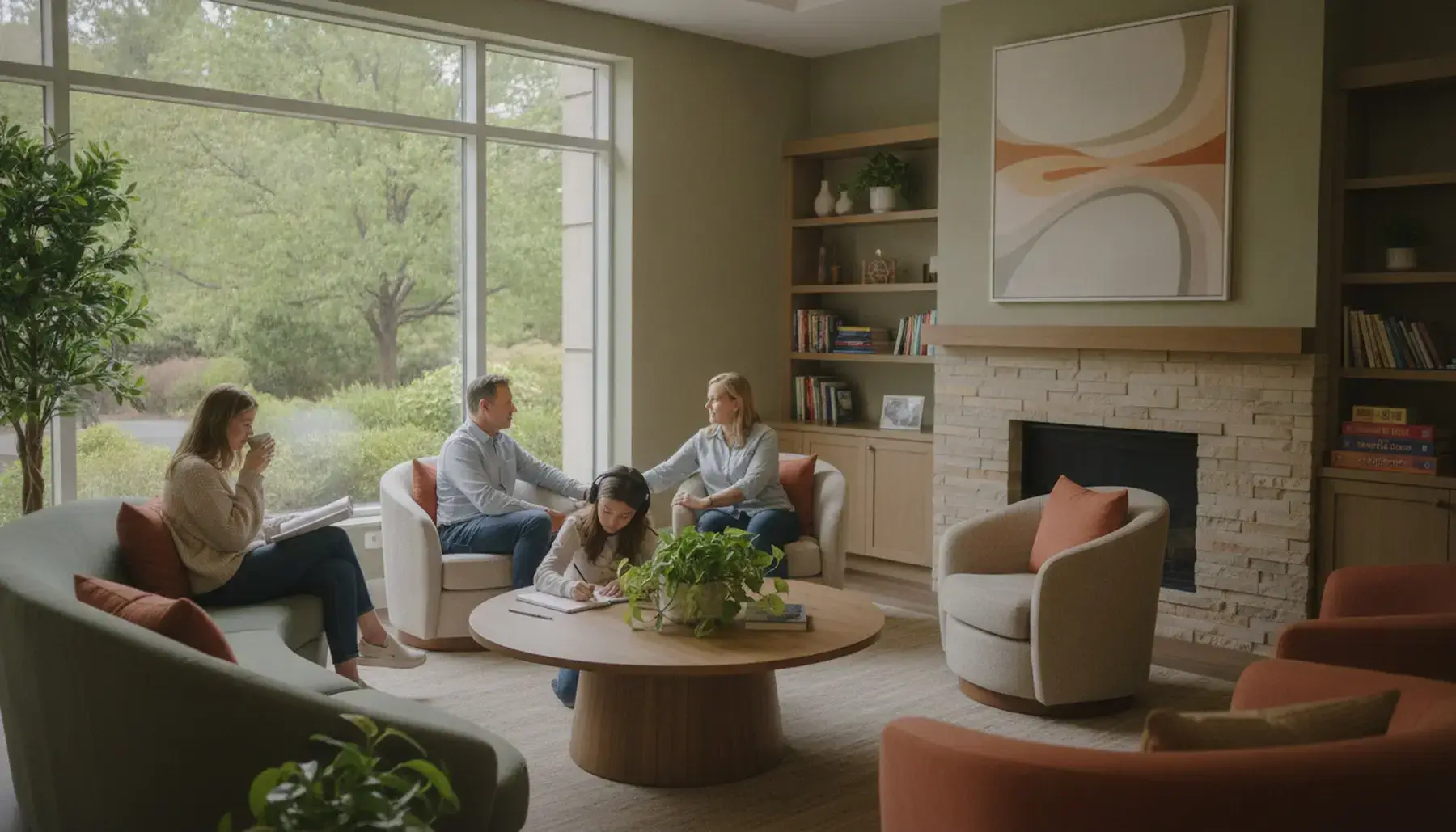
The corner of our Calm Water Way studio where most first sessions happen.
A version that survives a real week
Most people abandon grounding because the version they learned takes twenty minutes and a quiet house. This one fits between meetings.
Put both feet flat and press down until you feel the floor push back.
Name four things you can see, without describing them.
Breathe out longer than you breathe in, six times.
Unclench your jaw and drop your shoulders one inch.
Return to whatever you were doing without grading how it went.
The last step matters most. Grounding practised as a test becomes another thing to fail. Practised as a habit, it quietly widens the gap between a difficult thought and what you
do next.